
Nuntia Recens - Recent News
- My startup Cat.IA - AI.Innovations develops research-grounded Artificial Intelligence and Machine Learning approaches for complex, dynamic and stochastic systems.
- Cat.IA focuses particularly on complex time series, anomaly and regime detection, stochastic and dynamic systems, reinforcement learning, sequential decision-making and hybrid mathematical AI.
- The Cat.IA Tech section presents the technical frameworks underlying these approaches, whilst the Cat.IA AI & Math Blog discusses selected developments in contemporary machine learning and reinforcement learning research.
Our core capabilities are organized around four complementary areas:
- Stochastic & Dynamic Systems,
- Reinforcement Learning & Sequential Decision-Making,
- Complex Time Series, Anomalies & Regime Changes,
- Hybrid Mathematical AI.
Research Interests & Academic Service
My academic author profiles on MathSciNet
MathSciNet Author Profile Google Scholar
Google Scholar Profile zbMATH
zbMATH Author Profile & ORCID
ORCID Author Profile.
My Erdös number is 3; the path is: Paul Erdös \( \longrightarrow\) Endre Csáki \( \longrightarrow\) Lajos Horváth \( \longrightarrow\) Gilles Teyssière
I'm interested in the following topics, though not exclusively:
- Machine learning, artificial intelligence, and complexity in financial markets,
- Long-memory and multifractal processes, change-point detection,
- Wavelet signal processing of scaling processes.
Publications
- D. Surgailis, G. Teyssière and M. Vaičiulis.
The increment ratio statistic.
Journal of Multivariate Analysis (2008) vol 99, 510-541.
MR2396977 PDFWe introduce a new statistic written as a sum of certain ratios of second order increments of partial sums process $S_n = \sum_{t=1}^n X_t$ of observations, which we call the Increment Ratio (IR) statistic. The IR statistic can be used for testing nonparametric hypotheses for $d-$integrated ($-1/2 < d < 3/2$) behavior of time series $X_t$, including short memory ($d=0$), (stationary) long-memory $(0 < d < 1/2)$ and unit roots ($d=1$). If $S_n$ behaves asymptotically as an (integrated) fractional Brownian motion with parameter $H =d + 1/2$, the IR statistic converges to a monotone function $\Lambda (d)$ of $d \in (-1/2,3/2)$ as both the sample size $N$ and the window parameter $m$ increase so that $N/m \to \infty$. For Gaussian observations $X_t$, we obtain a rate of decay of the bias $\mathbb{E} I\!R - \Lambda (d)$ and a central limit theorem $(N/m)^{1/2}(I\!R - \mathbb{E} I\!R) \rightarrow {\cal N}(0, \sigma^2(d))$, in the region $-1/2 < d < 5/4$. Graphs of the functions $\Lambda (d)$ and $\sigma (d)$ are included. A simulation study shows that the IR test for short memory ($d=0$) against stationary long-memory alternatives $(0 < d < 1/2)$ has good size and power properties and is robust against changes in mean, slowly varying trends and nonstationarities. We apply this statistic to sequences of squares of returns on financial assets and obtain a nuanced picture of the presence of long-memory in asset price volatility.
- M. Lavielle and G. Teyssière.
Detection of multiple change-points in multivariate time
series.
L. Mathematical Journal (2006) vol 46, 287-306.
MR2285348 PDF SlidesWe consider the multiple change-point problem for multivariate time series, including strongly dependent processes, with an unknown number of change-points. We assume that the covariance structure of the series changes abruptly at some unknown common change-point times. The proposed adaptive method is able to detect changes in multivariate i.i.d., weakly and strongly dependent series. This adaptive method outperforms the Schwarz criteria, mainly for the case of weakly dependent data. We consider applications to multivariate series of daily stock indices returns and series generated by an artificial financial market.
Key words: adaptive methods, multivariate time series, change-point detection, heteroskedasticity. - M. Lavielle and G. Teyssière.
Adaptive detection of multiple change-points in asset price
volatility.
In Long-Memory in Economics. G. Teyssière et al. editors, 129-156, Springer (2007).
MR2265058 PDFThis chapter considers the multiple change-point problem for time series, including strongly dependent processes, with an unknown number of change-points. We propose an adaptive method for finding the segmentation, i.e., the sequence of change-points \(\boldsymbol{\tau}\) with the optimal level of resolution. This optimal segmentation \(\hat{\boldsymbol{\tau}}\) is obtained by minimizing a penalized contrast function \(J(\boldsymbol{\tau},\boldsymbol{y}) + \beta\; {\rm pen}(\boldsymbol{\tau})\). For a given contrast function \(J(\boldsymbol{\tau},\boldsymbol{y})\) and a given penalty function \({\rm pen}(\boldsymbol{\tau})\), the adaptive procedure for automatically choosing the penalization parameter \(\beta\) is such that the segmentation \(\hat{\boldsymbol{\tau}}\) does not strongly depend on \(\beta\). This algorithm is applied to the problem of detection of change-points in the volatility of financial time series, and compared with Vostrikova's (1981) binary segmentation procedure.
- G. Teyssière and P. Abry.
Wavelet analysis of nonlinear long-range dependent
processes. Applications to financial time series.
In Long-Memory in Economics. G. Teyssière et al. editors, 173-238, Springer (2007).
MR2265060 PDFWe present and study the performance of the semiparametric wavelet estimator for the long–memory parameter devised by Veitch and Abry (1999). We compare this estimator with two semiparametric estimators in the spectral domain, the local Whittle (LW) estimator developed by Robinson (1995a) and the “log– periodogram” (LP) estimator by Geweke and Porter–Hudak (1983). The wavelet estimator performs well for a wide range of nonlinear long–memory processes in the conditional mean and the conditional variance, and is reliable for discriminating between change–points and long–range dependence in volatility. We also address the issue of selection of the range of octaves used as regressors by the weighted least squares estimator. We will see that using the feasible optimal bandwidths for either the LW and LP estimators is a useful rule of thumb for selecting the lowest octave. We apply the wavelet estimator to volatility series of high frequency (intra–day) FX rates, and to the volatility and volume of stocks of the Dow Jones Industrial Average Index.
- D. Kateb, A. Seghier and G. Teyssière.
Prediction, orthogonal polynomials and Toeplitz matrices:
a fast and reliable approximation to the Durbin-Levinson algorithm,
In Long-Memory in Economics. G. Teyssière et al. editors, 239-261, Springer (2007).
MR2265061 -
M. Lavielle and G. Teyssière.
Détection de
ruptures multiples dans des séries temporelles multivariées
Liet. Mat. Rink. (2006) vol 46, 351-376,
MR2285348 PDF - P. Doukhan, G. Teyssière and P. Winant.
A LARCH\((\infty)\) vector valued process.
In Dependence in Probability and Statistics. Lecture Notes in Statistics,, vol 187, 245-258, Springer (2006).
MR2283258. - A. Kirman and G. Teyssière.
Testing for bubbles and change-points.
Journal of Economic Dynamics and Control (2005) vol 29, 765-799.
MR2129522
The corrected version of the model studied in this work is given in MR2285348 - L. Horváth, P. Kokoszka and G. Teyssière.
Bootstrap misspecification tests for ARCH based on the
empirical process of squared residuals.
Journal of Statistical Computation and Simulation (2004) vol 74, 469-485.
MR2073226 PDFWe propose and study by means of simulations and graphical tools a class of goodness-of-fit tests for ARCH models. The tests are based on the empirical distribution function of squared residuals and smooth (parametric) bootstrap. We examine empirical size and power by means of a simulation study. While the tests have overall correct size, their power strongly depends on the type of alternative and is particularly high when the assumption of Gaussian innovations is violated. As an example, the tests are applied to returns on Foreign Exchange rates.
Key words: ARCH model, empirical process, goodness-of-fit tests, size-power curves, smooth bootstrap, squared residuals. - P. Kokoszka, G. Teyssière and A. Zhang.
Confidence intervals for the autocorrelations
of the squares of GARCH sequences.
In Computational Science - ICCS 2004. Lecture Notes in Computer Science. M. Bubak et al. editors, vol 3039, 827-834, Springer (2004). Volume for the Workshop on Computational Methods in Finance and Insurance, Kraków, Poland, June 2004.
MR2233424 PDF Slides - L. Giraitis, P. Kokoszka, R. Leipus and G. Teyssière.
On the power of \(R/S\)-type tests under contiguous and semi
long-memory alternatives.
Acta Applicandae Mathematicae (2003) vol 78, 285-299.
Special Issue for the 8th Vilnius Conference on Probability Theory and Mathematical Statistics
MR2024032 PDFThe paper deals with the power and robustness of the \(R/S\)-type tests under “contiguous” alternatives. We briefly review some long memory models in levels and volatility, and describe the \(R/S\)-type tests used to test for the presence of long memory. The empirical power of the tests is investigated when replacing the fractional difference operator \( (1−L)^d \) by the operator \( (1−rL)^d\), with \( r < 1 \) close to 1, in the FARIMA, LARCH and ARCH time series models. We also investigate the Gegenbauer process with a pole of the spectral density at frequency close to zero.
- G. Teyssière.
Interaction models for common long-range
dependence in asset price volatilities.
Invited chapter in Processes with Long Range Correlations: Theory and Applications. Lecture Notes in Physics. G. Rangarajan and M. Ding editors, vol 621, 251-269, Springer (2003).
DOI PDFWe consider a class of microeconomic models with interacting agents which replicate the main properties of asset prices time series: non-linearities in levels and common degree of long-memory in the volatilities and co-volatilities of multivariate time series. For these models, long-range dependence in asset price volatility is the consequence of swings in opinions and herding behavior of market participants, which generate switches in the heteroskedastic structure of asset prices. Thus, the observed long-memory in asset prices volatility might be the outcome of a change-point in the conditional variance process, a conclusion supported by a wavelet analysis of the volatility series. This explains why volatility processes share only the properties of the second moments of long-memory processes, but not the properties of the first moments.
Key words: long-memory, field effects, interaction models, change-points, wavelets.
Invited lecture to the International Conference on Long-Range Dependent Stochastic Processes and their Applications, Bangalore, India, January 2002. - L. Giraitis, P. Kokoszka, R. Leipus and G. Teyssière.
Rescaled variance and related tests for
long memory in volatility and levels.
Journal of Econometrics (2003) vol 112, 265-294.
MR1951145 PDF
See also L. Giraitis, P. Kokoszka, R. Leipus and G. Teyssière, Corrigendum to "Rescaled variance and related tests for long memory in volatility and levels",
Journal of Econometrics (2005) vol 126, 571-572.
MR2155635 PDF - L. Horváth, P. Kokoszka and G. Teyssière.
Empirical process of the squared residuals
of an ARCH sequence.
The Annals of Statistics (2001) vol 29, 445-469.
MR1863965 PDFWe derive the asymptotic distribution of the sequential empirical process of the squared residuals of an ARCH(\(p\)) sequence. Unlike the residuals of an ARMA process, these residuals do not behave in this context like asymptotically independent random variables, and the asymptotic distribution involves a term depending on the parameters of the model. We show that in certain applications, including the detection of changes in the distribution of the unobservable innovations, our result leads to asymptotically distribution free statistics.
- L. Giraitis, P. Kokoszka, R. Leipus and G. Teyssière.
Semiparametric estimation of the intensity
of long-memory in conditional heteroskedasticity.
Statistical Inference for Stochastic Processes (2000) vol 3, 113-128. (Special Issue on Limit Theorems and Long-Range Dependence).
MR1819290 PDFThe paper is concerned with the estimation of the long memory parameter in a conditionally heteroskedastic model proposed by Giraitis et al. (1999b). We consider estimation methods based on the partial sums of the squared observations, which are similar in spirit to the classical \(R / S\) analysis, as well as spectral domain approximate maximum likelihood estimators. We review relevant theoretical results and present an empirical simulation study.
Key words: long memory, ARCH models, semiparametric estimation, modified \(R/S\), KPSS and \(V/S\) statistics, periodogram. - A. Kirman and G. Teyssière.
Bubbles and Long Range Dependence in Asset Prices
Volatilities.
In Equilibrium, Markets and Dynamics, 307-327, Springer (2002).
The corrected version of the model studied in this work is given in MR2285348 - G. Teyssière and A. Kirman.
Microeconomic models for long-memory in the volatility of financial time series.
(2001).
The corrected version of the model studied in this work is given in MR2285348 - G. Teyssière. Multivariate long-memory ARCH
modelling for high frequency foreign exchange rates.
In Proceedings of the Second High Frequency Data in Finance (HFDF-II) Conference, Olsen & Associates, Zurich, (1998).
PDFWe estimate here several trivariate FIGARCH models on three series of intra-day FX rates returns: USD/DEM, USD/GBP, and USD/JPY. We consider the trivariate constant conditional correlation CCC-FIGARCH, the unrestricted trivariate FIGARCH, and a trivariate double long-memory model combining an ARFIMA regression function with an unrestricted trivariate FIGARCH skedastic function. Estimation results show that: (i) the three series are anti-persistent and share a common degree of short-range dependence, (ii) the series USD/DEM and USD/JPY have the same regression function, (iii) the three series share the same degree of long-memory in their conditional variance, (iv) the conditional covariances \(\mbox{Cov}_t(\mbox{USD/DEM, USD/JPY})\) and \(\mbox{Cov}_t(\mbox{USD/DEM,USD/GBP})\) have a common degree of persistence, although this degree is different from the degree of long-memory of the conditional variances, (v) the unrestricted FIGARCH model dominates the CCC-FIGARCH model, although (vi) the seasonality in the volatility of these series cannot be captured by FIGARCH models.
Key words: intra-day data, long-memory, antipersistence, heteroskedasticity, multivariate models, multivariate unconstrained FIGARCH model, double long-memory, multivariate ARFIMA-FIGARCH models, second generation models.In 1996, I pioneered the class of double long memory processes: Double Long-Memory Financial Time Series (1996) Univ. of London, with the ARFIMA-FIGARCH. This was my first paper in time series analysis.
Presented in the 1997 Econometric Society European Meeting, the 1997 Society for Economic Dynamics conference Oxford, the 28th Workshop of the Euro Working Group on Financial Modelling, May 2001, Slides
Books
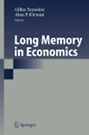
Long-Memory in Economics
G. Teyssière and A. Kirman editors, Springer (2007).
MR2263582
Zbl 1106.91001
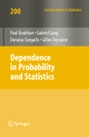
Dependence in Probability and Statistics,
Lecture Notes in Statistics, Vol 200.
G. Lang, D. Surgailis and G. Teyssière editors, Springer (2010).
MR2741808
Zbl 1196.60011