We introduce a new statistic written as a sum of certain ratios of second order increments of partial sums process $S_n = \sum_{t=1}^n X_t$ of observations, which we call the Increment Ratio (IR) statistic. The IR statistic can be used for testing nonparametric hypotheses for $d-$integrated ($-1/2 \lt d \lt 3/2$) behavior of time series $X_t$, including short memory ($d=0$), (stationary) long-memory $(0 \lt d \lt 1/2)$ and unit roots ($d=1$). If $S_n$ behaves asymptotically as an (integrated) fractional Brownian motion with parameter $H =d + 1/2$, the IR statistic converges to a monotone function $\Lambda (d)$ of $d \in (-1/2,3/2)$ as both the sample size $N$ and the window parameter $m$ increase so that $N/m \to \infty$. For Gaussian observations $X_t$, we obtain a rate of decay of the bias $\mathrm{E} IR - \Lambda (d)$ and a central limit theorem $(N/m)^{1/2}(IR - \mathrm{E} IR) \rightarrow {\cal N}(0, \sigma^2(d))$, in the region $-1/2 \lt d \lt 5/4$. Graphs of the functions $\Lambda (d)$ and $\sigma (d)$ are included. A simulation study shows that the IR test for short memory ($d=0$) against stationary long-memory alternatives $(0 \lt d \lt 1/2)$ has good size and power properties and is robust against changes in mean, slowly varying trends and nonstationarities. We apply this statistic to sequences of squares of returns on financial assets and obtain a nuanced picture of the presence of long-memory in asset price volatility.
We present and study the performance of the semiparametric wavelet estimator for the long-memory parameter devised by Veitch and Abry (1999). We compare this estimator with two semiparametric estimators in the spectral domain, the local Whittle (LW) estimator developed by Robinson (1995a) and the log-periodogram (LP) estimator by Geweke and Porter-Hudak (1983). The wavelet estimator performs well for a wide range of nonlinear long-memory processes in the conditional mean and the conditional variance, and is reliable for discriminating between change-points and long-range dependence in volatility. We also address the issue of selection of the range of octaves used as regressors by the weighted least squares estimator. We will see that using the feasible optimal bandwidths for either the LW and LP estimators, respectively studied by Henry and Robinson (1996) and Henry (2001), is a useful rule of thumb for selecting the lowest octave. We apply the wavelet estimator to volatility series of high frequency (intra-day) Foreign Exchange (FX) rates, and to the volatility and volume of stocks of the Dow Jones Industrial Average Index.
This chapter considers the multiple change-point problem for time series, including strongly dependent processes, with an unknown number of change-points. We propose an adaptive method for finding the segmentation, i.e., the sequence of change-points $\boldsymbol{\tau}$ with the optimal level of resolution. This optimal segmentation $\hat{\boldsymbol{\tau}}$ is obtained by minimizing a penalized contrast function $J(\boldsymbol{\tau},\boldsymbol{y}) + \beta {\rm pen}(\boldsymbol{\tau})$. For a given contrast function $J(\boldsymbol{\tau},\boldsymbol{y})$ and a given penalty function ${\rm pen}(\boldsymbol{\tau})$, the adaptive procedure for automatically choosing the penalization parameter $\beta$ is such that the segmentation $\hat{\boldsymbol{\tau}}$ does not strongly depend on $\beta$. This algorithm is applied to the problem of detection of change-points in the volatility of financial time series, and compared with Vostrikova's (1981) binary segmentation procedure.
Let $f$ be a given function on the unit circle such that $\displaystyle f(e^{i\theta})=\mid 1-e^{i\theta}\mid^{2\alpha} f_1(e^{i\theta})$ with $\mid \alpha \mid \lt \frac{1}{2}$ and $f_1$ a strictly positive function that will be supposed to be sufficiently smooth. We give the asymptotic behavior of the first column of the inverse of $T_N(f)$, the $(N+1)\times (N+1)$ Toeplitz matrix with elements $(f_{i-j})_{0\le i,j \le N}$ where $\displaystyle f_k=\frac{1}{2\pi}\int_0^{2\pi} f(e^{i\theta})e^{-ik\theta}~d\theta$. We shall compare our numerical results with those given by the Durbin-Levinson algorithm, with particular emphasis on problems of predicting either stationary stochastic long-range dependent processes, or processes with a long-range dependent component.
We consider the multiple change-point problem for multivariate time series,
including strongly dependent processes, with an unknown number of
change-points. We assume that the covariance structure of the series changes
abruptly at some unknown common change-point times. The proposed adaptive
method is able to detect changes in multivariate i.i.d., weakly and strongly
dependent series. This adaptive method outperforms the Schwarz criteria,
mainly for the case of weakly dependent data. We consider applications to
multivariate series of daily stock indices returns and series generated by an
artificial financial market.
Key words: adaptive methods, multivariate time series, change-point detection, heteroskedasticity.
Nous considérons le problème de détection de ruptures multiples pour des séries chronologiques multivariées, y compris des processus fortement dépendants, avec un nombre inconnu de ruptures. Nous supposons que la structure de covariance de ces séries chronologiques change de façcon abrupte à des dates inconnues. La méthode adaptative proposée ici est capable de détecter des ruptures dans des séries multivariées indépendantes et identiquement distribuées (i.i.d.), faiblement et fortement dépendantes. Cette méthode adaptative surclasse le critère de Schwartz, principalement dans le cas de données faiblement dépendantes. Nous considérons des applications à des séries chronologiques multivariées de rendements d'indices boursiers journaliers et à des séries générées par un marché financier artificiel.
The purpose of this chapter is to propose a unified framework for the study of ARCH$(\infty)$ processes that are commonly used in the financial econometrics literature. We extend the study, based on Volterra expansions, of univariate ARCH$(\infty)$ processes by Giraitis, Kokoszka and Leipus (2000) to the multi-dimensional case.
A model for a financial asset is constructed with two types of agents,
who differ in terms of their beliefs. The proportion of the two types
changes over time according to stochastic processes which model the
interaction between the agents. Agents do not persist in holding
``wrong'' beliefs and bubble-like phenomena in the asset price occur.
We consider tests for detecting bubbles in the conditional
mean and multiple changes in the conditional variance of the process.
A wavelet analysis of the series generated by our models shows that
the strong persistence in the volatility is likely to be the outcome
of a mix of changes in regimes and a moderate level of long-range
dependence. These results are consistent with what has been observed
by Kokoszka and Teyssière (2002) and Teyssière (2003).
Key words: market interactions, bubbles,
long-memory heteroskedasticity, pseudo long-memory, change-point,
wavelets.
We propose and study by means of simulations and graphical
tools a class of goodness-of-fit tests
for ARCH models. The tests are based on the empirical
distribution function of squared residuals and smooth (parametric)
bootstrap. We examine empirical size and power by means of a
simulation study. While the tests have overall correct size, their
power strongly depends on the type of alternative and is particularly
high when the assumption of Gaussian innovations is violated.
As an example, the tests are applied to returns on Foreign Exchange
rates.
Key words: ARCH model, empirical process, goodness-of-fit tests, size-power curves, smooth bootstrap,
squared residuals.
We compare three methods of constructing confidence intervals for sample autocorrelations of squared returns modeled by models from the GARCH family. We compare the residual bootstrap, block bootstrap and subsampling methods. The residual bootstrap based on the standard GARCH(1,1) model is seen to perform best.
The paper deals with the power and robustness of the $R/S$ type tests under “contiguous”
alternatives. We briefly review some long memory models in levels and volatility, and describe the
$R/S$-type tests used to test for the presence of long memory. The empirical power of the tests is
investigated when replacing the fractional difference operator $(1 − L)^d$ by the operator $(1 − rL)^d$,
with $r \lt 1$ close to 1, in the FARIMA, LARCH and ARCH time series models. We also investigate
the Gegenbauer process with a pole of the spectral density at frequency close to zero.
Key words: long memory, Gegenbauer process, ARCH processes, linear ARCH, semi-long memory,
modified $R/S$ statistic, KPSS statistic, $V/S$ statistic.
We consider a class of microeconomic models with interacting agents
which replicate the main properties of asset prices time series:
non-linearities in levels and common degree of long-memory in the
volatilities and co-volatilities of multivariate time series. For these
models, long-range dependence in asset price volatility is the
consequence of swings in opinions and herding behavior of market
participants, which generate switches in the heteroskedastic structure
of asset prices. Thus, the observed long-memory in asset prices
volatility might be the outcome of a change-point in the conditional
variance process, a conclusion supported by a wavelet analysis of the
volatility series. This explains why volatility processes share only
the properties of the second moments of long-memory processes, but not
the properties of the first moments.
Key words: long-memory, field effects, interaction models, change-points, wavelets.
This paper studies properties of tests for long memory for general fourth order stationary sequences.
We propose a rescaled variance test based on the $V/S$ statistic which is shown to have a simpler asymptotic
distribution and to achieve a somewhat better balance of size and power than Lo's (1991)
modified $R/S$ test and the KPSS test of Kwiatkowski et al. (1992).
We investigate theoretical performance of $R/S$, KPSS and $V/S$ tests under short memory hypotheses and long memory
alternatives, providing a Monte Carlo study and a brief empirical example.
Assumptions of the same type are used in both short and long memory cases, covering all persistent dependence scenarios.
We show that the results naturally apply and the assumptions are well adjusted to linear sequences (levels) and
to squares of linear ARCH sequences (volatility).
Key words: long memory, modified $R/S$ statistic, KPSS statistic, $V/S$ statistic, linear process,
LARCH model.
A model for a financial asset is constructed with two types of agents. The agents differ in terms of their beliefs.
The proportions of the two types change over time according to a stochastic process which models the interaction between the agents.
Thus, unlike other models, agents do not persist in holding "wrong" beliefs. Bubble-like phenomena in the asset price occur.
We consider several tests for detecting long range dependence and change-points in the conditional variance process.
Although the model seems to generate long-memory properties of the volatility series, we show that this is due to the switching of
regimes which are detected by the tests we propose.
Key words: interaction, bubbles, testing, long-memory, heteroskedasticity, change-point.
We show that a class of microeconomic behavioral
models with interacting agents, derived from Kirman
(1991,1993), can replicate the empirical
long-memory properties of the two first conditional moments of
financial time series. The essence of these models is that the
forecasts and thus the desired trades of the individuals in the
markets are influenced, directly, or indirectly by those of the other
participants. These ``field effects'' generate ``herding'' behaviour
which affects the structure of the asset price dynamics. The series of
returns generated by these models display the same empirical
properties as financial returns: returns are $I(0)$, the series of
absolute and squared returns display strong dependence, while the
series of absolute returns do not display a trend. Furthermore, this
class of models is able to replicate the common long-memory properties
in the volatility and co-volatility of financial time series,
revealed by Teyssière (1997,1998a).
These properties are investigated by using various model independent
tests and estimators, i.e., semiparametric and nonparametric,
introduced by Lo (1991), Kwiatkowski, Phillips, Schmidt and Shin (1992),
Robinson (1995), Lobato and Robinson (1998}, Giraitis,
Kokoszka, Leipus and Teyssière (2000, 2001).
The relative performance of these tests and estimators for long-memory
in a non-standard data generating process is then assessed.
Key words: long-memory, microeconomic models, field
effects, semiparametric tests, conditional heteroskedasticity.
We derive the asymptotic distribution of the sequential empirical process of the squared residuals of an ARCH($p$) sequence.
Unlike the residuals of an ARMA process, these residuals do not behave in this context like asymptotically independent random
variables, and the asymptotic distribution involves a term depending on the parameters of the model.
We show that in certain applications, including the detection of changes in the distribution of the unobservable innovations,
our result leads to asymptotically distribution free statistics.
Key words: ARCH model, empirical process, squared residuals.
The paper is concerned with the estimation of the long memory parameter in a conditionally heteroskedastic model
proposed by Giraitis et al. (1999b). We consider estimation methods based on the partial sums of the squared observations,
which are similar in spirit to the classical $R / S$ analysis, as well as spectral domain approximate maximum likelihood estimators.
We review relevant theoretical results and present an empirical simulation study.
Key words: long memory, ARCH models, semiparametric estimation, modified $R/S$, KPSS and
$V/S$ statistics, periodogram.
We estimate here several trivariate FIGARCH models on three series of intra-day FX rates returns: USD/DEM, USD/GBP, and USD/JPY.
We consider the trivariate constant conditional correlation CCC-FIGARCH, the unrestricted trivariate FIGARCH, and a
trivariate double long-memory model combining an ARFIMA regression function with an unrestricted trivariate FIGARCH skedastic function.
Estimation results show that: (i) the three series are anti-persistent and share a common degree of short-range dependence,
(ii) the series USD/DEM and USD/JPY have the same regression function,
(iii) the three series share the same degree of long-memory in their conditional variance,
(iv) the conditional covariances $\mbox{Cov}_t(\mbox{USD/DEM, USD/JPY})$ and $\mbox{Cov}_t(\mbox{USD/DEM,USD/GBP})$ have a common degree of persistence,
although this degree is different from the degree of long-memory of the conditional variances,
(v) the unrestricted FIGARCH model dominates the CCC-FIGARCH model, although (vi) the seasonality in the volatility of
these series cannot be captured by FIGARCH models.
Key words: intra-day data, long-memory, antipersistence, heteroskedasticity, multivariate models, multivariate unconstrained FIGARCH model,
double long-memory, multivariate ARFIMA-FIGARCH models, second generation models.
Statistical Methods for the Evaluation of the Economic Consequences of Corruption.
J-P. Brun and G. Teyssière (Under preparation).
Dependence in Probability and Statistics,
Lecture Notes in Statistics, Vol 200.
P. Doukhan,
G. Lang, D. Surgailis and G. Teyssière editors, Springer (2010).
DOI, MR2741808
ISBN (Paperback): 978-3642141034
ISBN (eBook): 978-3642141041
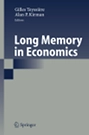
Long-Memory in Economics
G. Teyssière and A. Kirman editors, Springer (2007).
DOI,
MR2263582
ISBN (Hardcover): 978-3540226949
ISBN (Paperback): 978-3642061547
ISBN (eBook): 978-3540346258
We propose a new method for estimating the change-points of heart rate in the orthosympathetic and parasympathetic bands, based on the wavelet transform in the complex domain and the study of the change-points in the moments of the modulus of these wavelet transforms. We observe change-points in the distribution for both bands.
Two classes of tests designed to detect changes
in volatility are proposed. Procedures based on squared model
residuals and on the likelihood ratio are considered. The tests are
applicable to parametric nonlinear models like GARCH. Both asymptotic
and bootstrap tests are investigated by means of a simulation study
and applied to returns data. The tests based on the likelihood ratio
are shown to be generally preferable. A wavelet based estimator of
long memory is applied to returns data to shed light on the interplay
of change points and long memory.
Key words: GARCH model, change-point, likelihood ratio,
parametric bootstrap, squared residuals, size-power curves, wavelets.
We propose two multivariate long-memory ARCH models: we first consider
a long-memory extension of the restricted constant conditional
correlations (CCC) model introduced by Bollerslev (1990), and we
propose a new unrestricted conditional covariance matrix model which
models the conditional covariances as long-memory ARCH processes. We
apply these two models to two daily returns on foreign exchanges (FX)
rates series, the Pound-US dollar, and the Deutschmark-US dollar. The
estimation results for both models show: ($i$) that the unrestricted
model outperforms the restricted CCC model, and ($ii$) that all the
elements of the conditional covariance matrix share the same degree of
long-memory for the period April 1979-January 1997, i.e., after the
European Monetary System inception in March 1979. However, this result
does not hold for the period September 1971-January 1997, and the
floating period before March 1979. Semiparametric methods confirm that
the volatilities and co-volatility of the two FX rates share the same
long-range component, and that the break in the long-term structure is
likely to be caused by the European Monetary System inception.
Key words: long-memory processes, conditional
heteroskedasticity, multivariate long-memory ARCH models,
multivariate FIGARCH models, semiparametric estimators.
Researchers have been investigating the long-memory properties of financial time series
either in the mean or in the conditional variance. We show that some financial time
series display long-memory in both their conditional mean and their
conditional variance: we refer to such time series as double long-memory
time series. We model these series by combining a fractionally integrated regression
function and a fractionally integrated skedastic function. We examine the case of a
double long-memory model, the ARFIMA-FIGARCH, and we propose an estimation
procedure by QML which requires pre-sample values. We show, by using Monte Carlo simulations,
that the QML estimator of this model has some nice properties: it is root-$n$ consistent,
asymptotically normal, and the level of bias is negligible.
We study for this model some specification tests, i.e., the Ljung-Box statistics based on standardized
residuals, squared standardized residuals and absolute standardized residuals.
Disregarding the long-memory component in the regression function, even for moderate
values of the degree of long-memory which are not detected by appropriate statistical
tests, results in ($i$) an over-parameterization of the regression function,
($ii$) a bias in the estimation of the ARCH parameters of the conditional variance
function, whilst the long-memory parameter of the conditional variance is unaffected
by this misspecification, and ($iii$) a rejection of the null hypothesis of the
Ljung-Box statistic based on standardized residuals, whilst the Ljung-Box statistics based on
absolute and squared standardized residuals are unaffected.
Key words: fractionally integrated processes, double long-memory, heteroskedasticity, second generation
models, Monte Carlo methods.
In 1996, I pioneered the class of double long memory processes with the ARFIMA-FIGARCH; this was my first paper in time series analysis. My 1998 paper on multivariate (trivariate) ARFIMA-FIGARCH, published in the proceedings of the High Frequency Data in Finance-II conference organized by Olsen & Associates (see above in the list of publications) is available here in both Pdf and PostScript formats.